
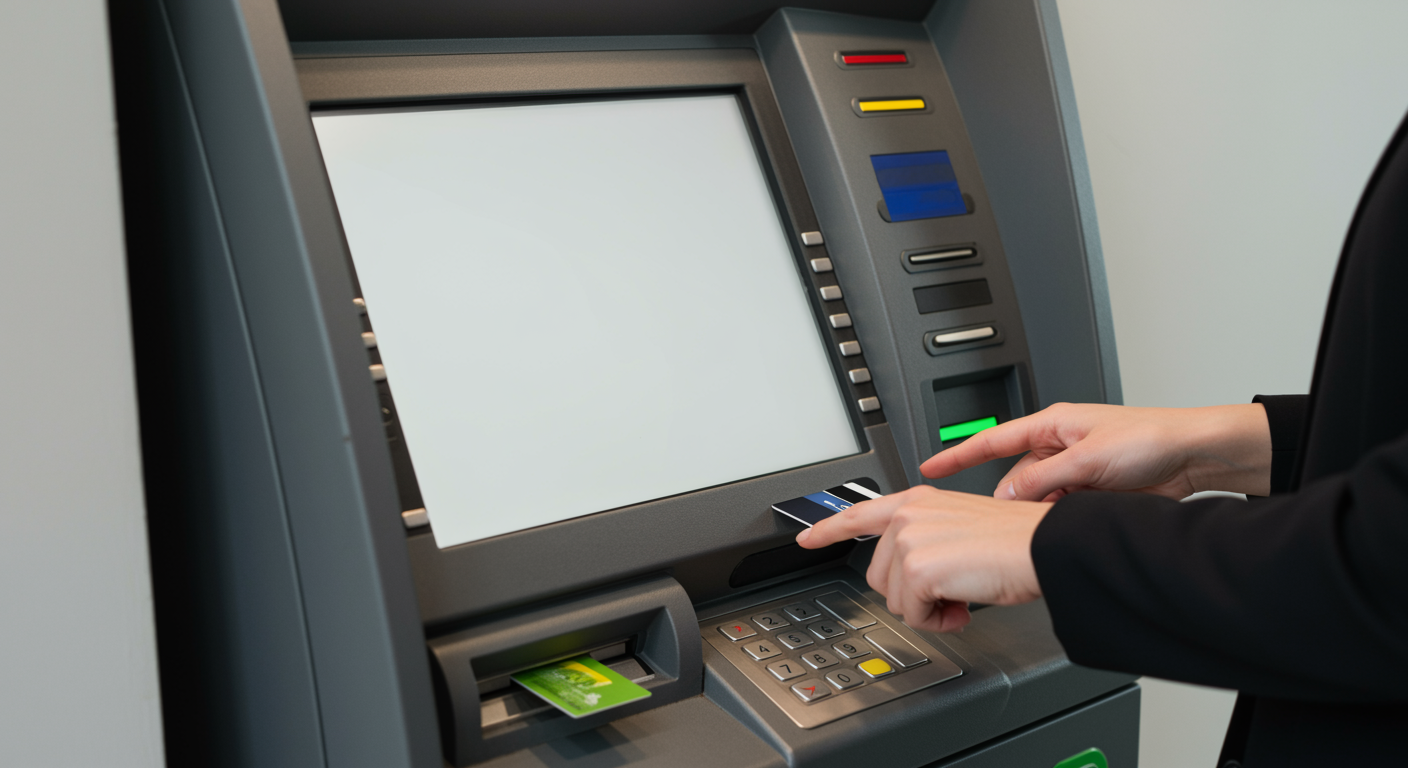
ATM withdrawal limits and fees in India are governed by a complex framework of regulations that directly impact millions of banking customers across the country. Understanding these limits is crucial for effective financial planning and avoiding unnecessary charges that can accumulate over time.
The Reserve Bank of India (RBI) sets the foundational guidelines for ATM operations, while individual banks implement their own specific policies within these regulatory boundaries. These regulations cover everything from daily withdrawal limits to transaction fees, creating a structured system that balances customer convenience with banking security and operational costs.
ATM Withdrawal Limits Across Banks
Different banks in India maintain varying withdrawal limits based on their internal policies and customer account types. These limits are designed to manage cash flow, reduce security risks, and ensure equitable access to ATM services across all customers.
The withdrawal limits typically depend on the type of account held, the specific debit card issued, and the bank’s risk management policies. Premium accounts often enjoy higher withdrawal limits compared to basic savings accounts, reflecting the different service tiers offered by banks.
| Bank | Minimum Withdrawal Limit | Maximum Withdrawal Limit |
|---|---|---|
| State Bank of India (SBI) | ₹500 | ₹40,000 |
| HDFC Bank | ₹500 | ₹50,000 |
| ICICI Bank | ₹500 | ₹1,00,000 |
| Axis Bank | ₹500 | ₹50,000 |
| Punjab National Bank (PNB) | ₹100 | ₹25,000 |
| Bank of Baroda | ₹500 | ₹40,000 |
| Canara Bank | ₹500 | ₹25,000 |
Key Factors Affecting ATM Withdrawal Limits
Account type plays a fundamental role in determining ATM withdrawal limits, with premium and salary accounts typically offering higher daily limits compared to basic savings accounts. Banks categorize accounts based on minimum balance requirements and relationship value, adjusting withdrawal privileges accordingly.
Card limitations represent another critical factor, as banks issue different types of debit cards with varying capabilities and security features. Classic cards generally have lower limits, while platinum and signature cards offer enhanced withdrawal limits to match their premium positioning.
Additionally, banks consider factors such as account age, transaction history, and customer profile when setting individual withdrawal limits. New accounts may face temporary restrictions until the banking relationship is established, while long-standing customers with good track records often enjoy higher limits and additional privileges.
ATM Transaction Fees and Charges
ATM transaction fees in India operate under a structured framework established by RBI regulations, which distinguish between free and chargeable transactions based on specific criteria. The RBI allows banks to offer a certain number of free transactions per month, after which charges apply according to standardized rates.
Understanding the fee structure is essential for managing banking costs effectively, as frequent ATM usage beyond free limits can result in substantial charges over time. The distinction between own-bank and other-bank ATM usage significantly impacts the fee calculation, with different rates applying to each category.
- Check your monthly free transaction limit with your specific bank and account type to understand your baseline allowance
- Monitor transactions at own-bank ATMs versus other-bank ATMs, as different fee structures apply to each category
- Track metro versus non-metro ATM usage, since RBI regulations provide different free transaction quotas based on location
- Review your monthly statement to identify patterns and optimize ATM usage to minimize charges
- Consider consolidating multiple small withdrawals into fewer larger transactions to stay within free limits
- Utilize your bank’s mobile app to monitor real-time transaction counts and avoid exceeding free quotas
Calculating Additional Charges
Tax impact on ATM fees adds another layer to the total cost of transactions, with Goods and Services Tax (GST) applicable on ATM charges as per current regulations. The GST component is calculated on top of the base transaction fee, making the effective cost higher than the advertised rate.
Banks are required to clearly communicate the total charge including taxes, ensuring transparency in fee calculation and helping customers understand the complete cost structure for ATM transactions beyond free limits.
Reducing ATM Fees and Charges
Strategic approaches to minimizing ATM fees can result in significant savings over time, particularly for customers who frequently use ATM services. Digital alternatives and smart planning can effectively reduce dependency on cash withdrawals.
- Utilize UPI payments for daily transactions to reduce cash dependency and avoid frequent ATM visits
- Leverage digital payment tools like mobile wallets and contactless cards for routine purchases
- Plan cash withdrawals strategically to maximize each transaction while staying within free limits
- Use your home bank’s ATM network primarily to avoid inter-bank transaction charges
- Consider upgrading to premium account types that offer higher free transaction limits
Credit Card Withdrawal Limits and Fees
Credit card cash withdrawals, commonly known as cash advances, operate under different fee structures and limits compared to debit card transactions. These transactions typically incur higher charges and may impact credit scores, making them less favorable for regular cash access needs.
Cash advance fees are substantially higher than regular ATM charges, often combining a percentage-based fee with a minimum charge structure. Additionally, cash advances begin accruing interest immediately without the grace period typically available for purchase transactions, making them an expensive form of borrowing.
| Credit Card Type | Withdrawal Limit | Fees |
|---|---|---|
| Basic Credit Cards | 20% of credit limit | 2.5% + GST (Min ₹300) |
| Premium Credit Cards | 30% of credit limit | 2.5% + GST (Min ₹500) |
| Super Premium Cards | 40% of credit limit | 3% + GST (Min ₹750) |
Comparing Credit Card Withdrawal Fees
Major banks in India maintain relatively similar fee structures for credit card cash advances, though specific rates and minimum charges may vary. HDFC Bank, ICICI Bank, and SBI typically charge between 2.5% to 3% of the withdrawn amount, with minimum fees ranging from ₹300 to ₹750 depending on card type.
The comparison reveals that premium cards often have higher minimum fees despite offering larger withdrawal limits, making cash advances particularly expensive for smaller amounts. Understanding these fee structures helps customers make informed decisions about cash access alternatives.
RBI Regulations and Updates
The Reserve Bank of India continuously updates ATM-related policies to balance customer convenience with banking system stability and security requirements. Recent policy changes through 2025 have focused on digital payment promotion while ensuring adequate cash access for all segments of the population.
Current RBI guidelines mandate specific free transaction quotas for different customer categories and geographical locations, with metro customers receiving five free transactions per month (including three at other bank ATMs) and non-metro customers receiving five free transactions at other bank ATMs. These regulations aim to ensure equitable access to banking services across urban and rural areas.
The RBI’s approach to ATM charge regulation reflects broader financial inclusion objectives, balancing the operational costs faced by banks with the need to maintain affordable banking services. Regular reviews of these policies ensure they remain relevant to changing economic conditions and technological advances in the banking sector.
Impact of Revised ATM Charges
- Increased adoption of digital payment methods as customers seek alternatives to avoid ATM charges
- Enhanced focus on financial planning among customers to optimize ATM usage within free limits
- Improved revenue streams for banks through standardized fee structures across the industry
- Greater awareness of banking costs leading to more informed customer choices regarding account types and banking relationships
- Accelerated development of digital banking infrastructure to support reduced cash dependency
Tips for Managing ATM Withdrawal Fees
Effective ATM fee management requires strategic planning and awareness of available alternatives that can reduce cash withdrawal dependency. Smart banking practices can significantly minimize the impact of ATM charges on personal finances while maintaining convenient access to cash when needed.
Implementing a systematic approach to cash management and leveraging digital payment options can help customers stay within free transaction limits while meeting their daily financial needs. Regular monitoring and adjustment of withdrawal patterns based on actual usage can optimize the balance between convenience and cost.
- Establish a monthly cash flow plan to determine optimal withdrawal amounts and frequency that align with free transaction limits
- Prioritize using your primary bank’s ATM network to maximize free transactions and avoid inter-bank charges
- Bundle multiple financial needs into single ATM visits rather than making frequent small withdrawals throughout the month
- Explore account upgrade options that offer higher free transaction limits if your current usage consistently exceeds free quotas
- Integrate digital payment methods into daily routines to reduce overall cash requirements and ATM dependency
- Monitor transaction counts regularly through mobile banking apps to avoid accidentally exceeding free limits near month-end